UX Design


We conducted Design thinking sessions for our Top 5 issues for the Housing situation in Kingston where we carried out several activities to engage the participants to understand their pain points on the very issue.
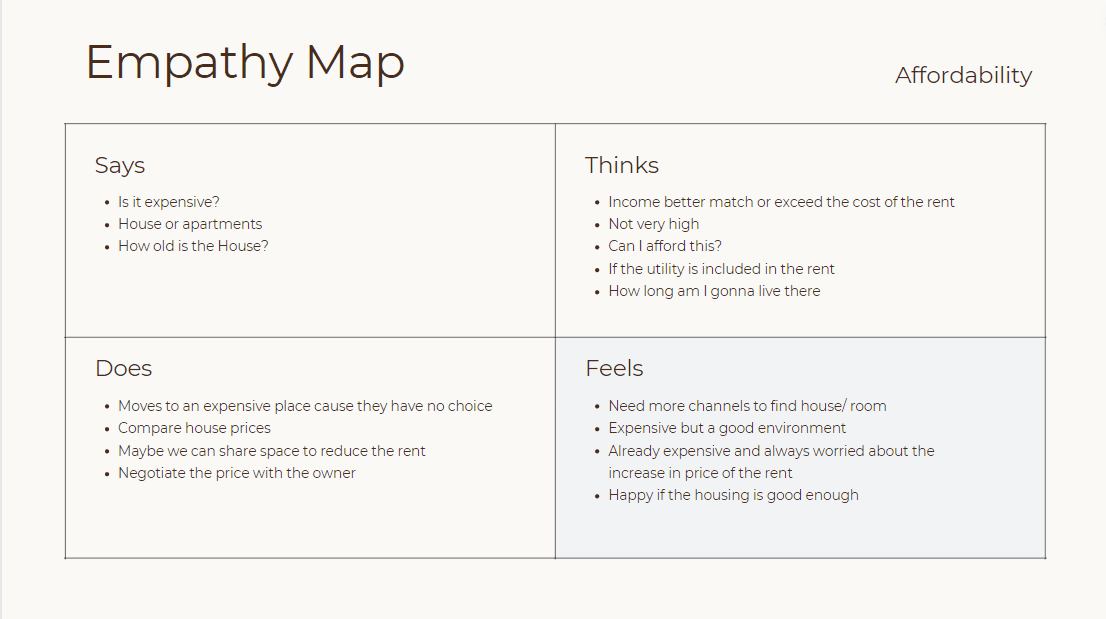
Pain Points
Uncertainty - They worry that prices might go up in the future
Financial Stress - They feel they need to earn more just to afford a decent place to live.
Utility Expenses - Utility bills being included in the rent
Key Findings
Adapting to Costs - There is a pervasive sense of uncertainty among renters regarding their ability to afford rent now and in the future.
Budget-Friendly Decisions - This financial stress impacts their overall well-being and quality of life.
Quality Matters - People still want a nice place to live with good amenities and surroundings.
Thinking Ahead - People consider how long they'll stay in a place

Pain Points
Limited Access to Essentials: Residents struggle with inadequate access to Essentials.
Commuting Hassles: Long travel times and unreliable transportation.
Geographic Barriers: In some neighborhoods, there aren't enough essential services like stores or parks nearby.
Key Findings
Importance of Nearby Amenities: People really want places like stores, parks, schools, and buses close by.
Geographical Challenges: The location of housing poses challenges in accessing essential services.
Community Concerns: Residents expressed concerns about the lack of accessibility to key amenities such as grocery stores and parks.
Opportunities for Improvement: Enhancing public transportation networks, promoting development, and engaging with the community.

Pain Points
Vulnerable entry points or access areas in buildings or neighborhoods
High theft rates of delivered parcels.
Limited Space: Many tenants feel cramped in their rental units due to small rooms.
Poor Quality: Outdated furniture and neglectful maintenance have made the rental units feel rundown.
Privacy Concerns: Shared bathrooms and thin walls mean tenants have little privacy.
Key Findings
Some Neighbourhoods don't feel safe, due to homeless people.
High level of insecurity in the vulnurabilities in the existing security infrastructure and protocols.
Old Furniture: Outdated furniture is a major source of dissatisfaction among tenants.
Extra Cost for Laundry: Charging tenants for laundry services adds to their financial burden.
Poor Maintenance: Neglecting maintenance leads to issues like poor ventilation.
Desire for More Bathrooms: Tenants want enough bathrooms to ensure privacy and convenience.

Pain Points
Awareness Gap: Many fall prey to housing scams due to a lack of awareness about common tactics.
Verification Challenges: It's hard to verify rental listings and agents in a digital marketplace.
Pressure to Act: Renters often feel pressured to secure housing quickly, leading to oversight of warning signs.
Complex Transactions: The complexity of rental transactions provides opportunities for fraud.
Key Findings
Continuous Learning: Stay updated on evolving fraudulent tactics.
Teamwork: Collaboration is key to addressing housing fraud.
Preventative Actions: Proactive measures are crucial for mitigating risk.
Public Engagement: Engage the public through awareness campaigns and reporting.